Home › Unique Pubs › Iconic Cities › Amsterdam

Amsterdam’s Brown Cafés, Dates Checked

These six rooms are all on our Unique Pubs deck. A brown café is a traditional Dutch pub; “oldest café” is a different question, and several famous façades are older than the café inside. Every photo is a licensed photograph of the real place, credited under the image.

Quick answer

A brown café is a traditional Dutch pub, not automatically an ancient one. Among these six rooms, all on our Unique Pubs deck, Karpershoek has the strongest early record (a tavern on the site in 1641, with a possible 1606 indication). In ’t Aepjen is a mid-16th-century house whose café dates from 1991. The City of Amsterdam’s 2025 research names De Drie Fleschjes (not on our deck) as the oldest documented drinking house still in use. Facts were checked on 23 November 2026.

PlaceClaimed / often citedWhat the records supportOn this site
In ’t Aepjen“Since 1519” or an ancient inn in the wooden houseBuilding about 1545–1550 (Hendrick de Keyser). City of Amsterdam / Maarten Hell (19 February 2025): there was never an inn in this house; the café was established in 1991Card
Café Karpershoek1606 (the café’s own tradition)Earliest firm record of a drinking house on the site: 1641, as De Oldenburger Kelder. The same city research notes a possible 1606 indicationCard
Café HoppeOn the Spui since 1670 (official about page)1670 is the café’s claim. No. 18 is the historic standing bar; no. 20 was brought in during the early 20th century and joined through the wall in the 1930sCard
Café Papeneiland“Café since 1642”Building constructed 1642. Official history: store/pub with a living area; full pub licence in 1896 as De Blauwe Druif; present name from the 1956 restorationCard
Wynand FockinkSometimes “Fockink since 1679,” or a 1724 takeoverVVAB / Brilleman (2015): Jan Bierman’s distillery on Pijlsteeg in 1679; Wynand arrived in 1724 and took over in 1730. The official about page does not itself give 1679Card
In de WildemanSometimes grouped with historic brown cafésOpened in 1986 (Stichting Erfgoed Nederlandse Biercultuur). A specialist beer café in a former distillery tasting room, not a 17th-century brown caféCard
De Drie FleschjesNot usually the tourist “oldest café” answerCity of Amsterdam (2025): oldest documented drinking house still in use, with a drinking house on the Gravenstraat site in 1618Not on our deck
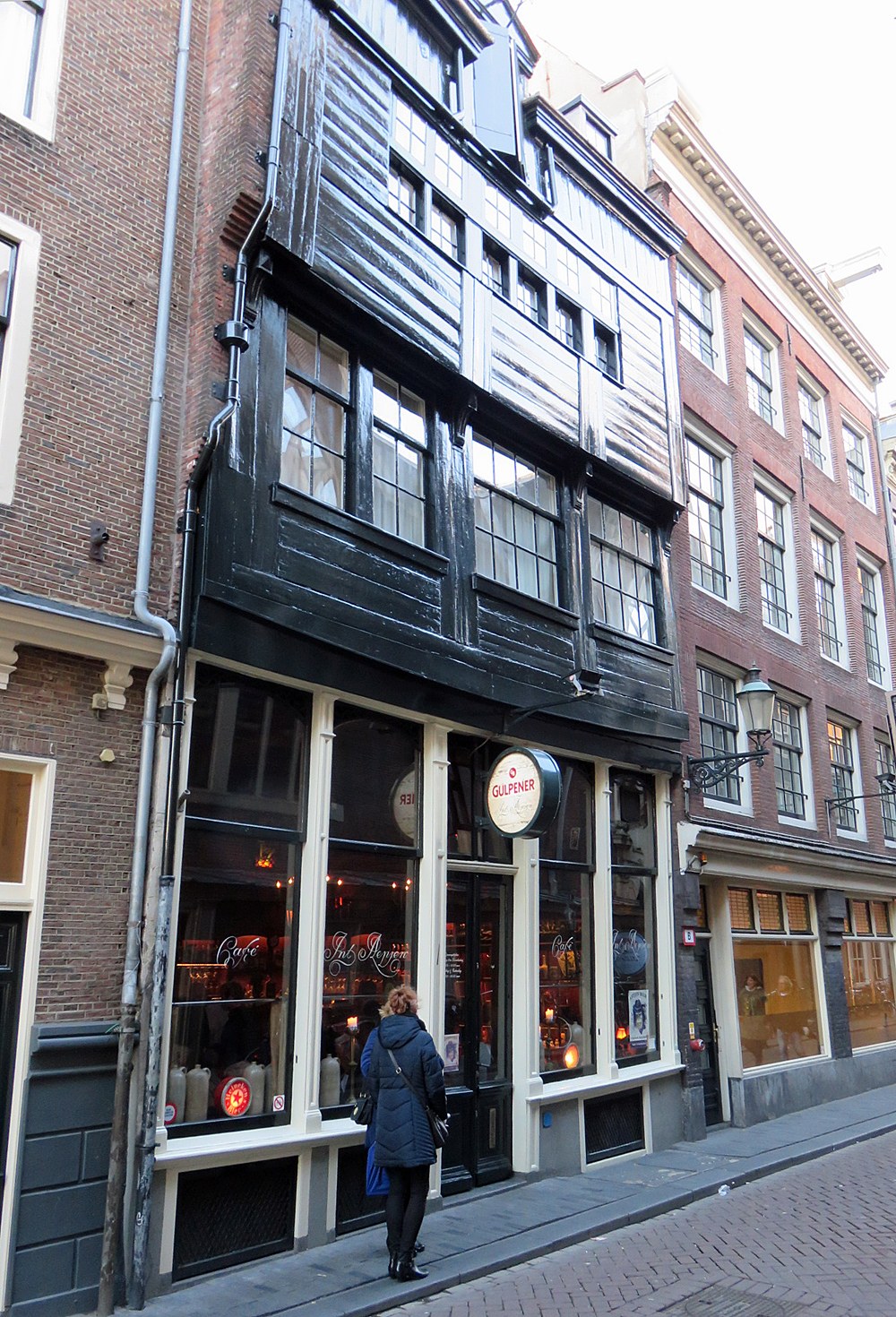
The historic wooden façade of In ’t Aepjen on the Zeedijk, Amsterdam

01 · Zeedijk

In ’t Aepjen

The house at Zeedijk 1 is genuinely old: Hendrick de Keyser’s research dates the timber building to about 1545–1550. What it is not, on the City of Amsterdam’s own 2025 account, is an ancient inn. City historian Maarten Hell, writing for Ons Amsterdam and summarised on amsterdam.nl (19 February 2025), says there was never a tavern in this wooden-fronted house, and that the café was established only in 1991. The sailors-paying-debts-with-monkeys story, and the saying “in de aap gelogeerd,” is legend. Dates such as “since 1519” that appear on some travel sites are not supported by that research.

Tip: Two minutes from Amsterdam Centraal, at the start of the Zeedijk. Come for the listed wooden house and a classic brown-café room — not because this address has been pouring beer since the 16th century.

Directions: Google Maps · Apple Maps

Photo: Paul2, CC BY-SA 4.0, via Wikimedia Commons

Sources: Hendrick de Keyser: Het Aepgen · Gemeente Amsterdam, 19 February 2025: De oudste kroeg

See In ’t Aepjen on our Unique Pubs deck →

Find a stay near In ’t Aepjen →
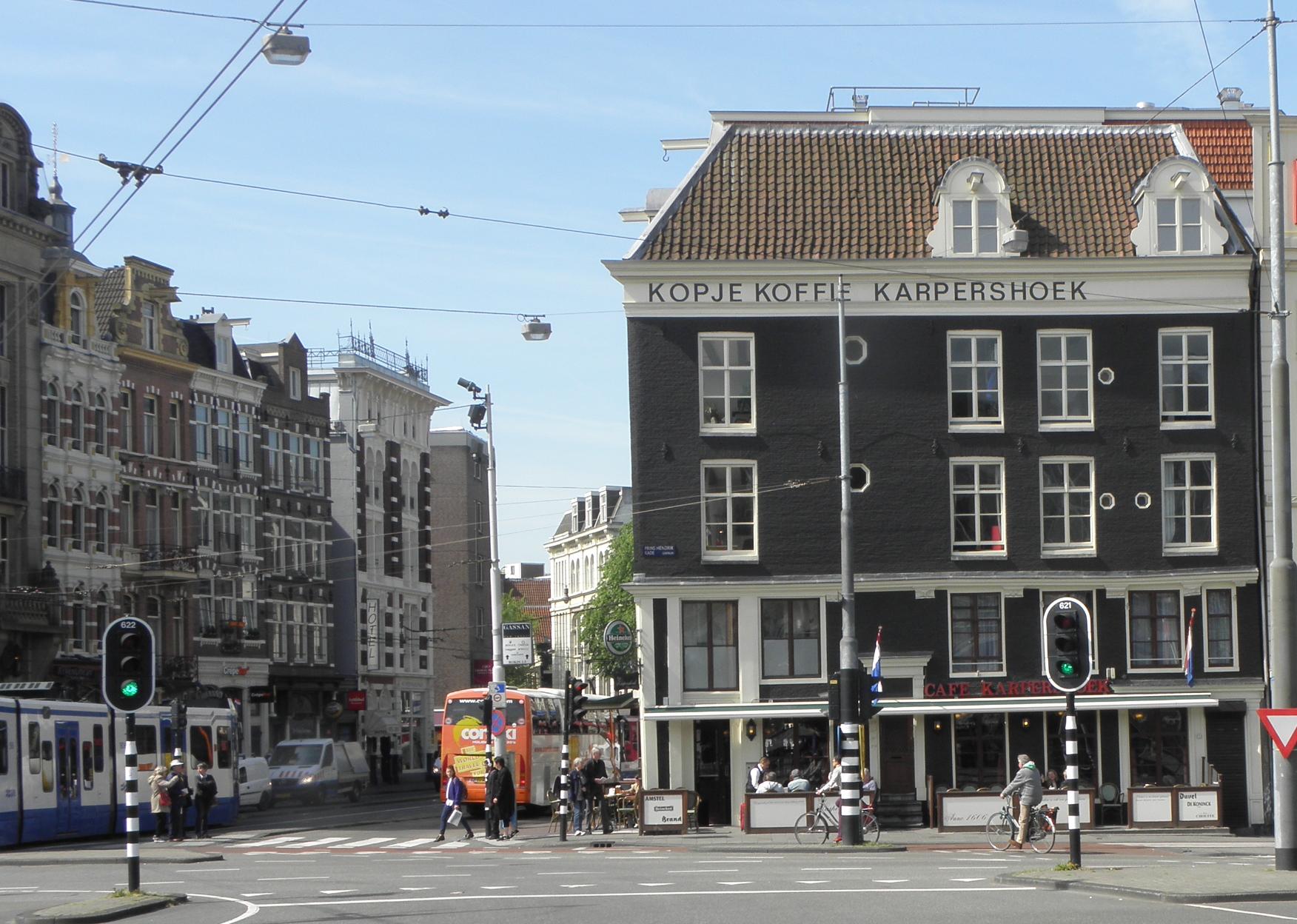
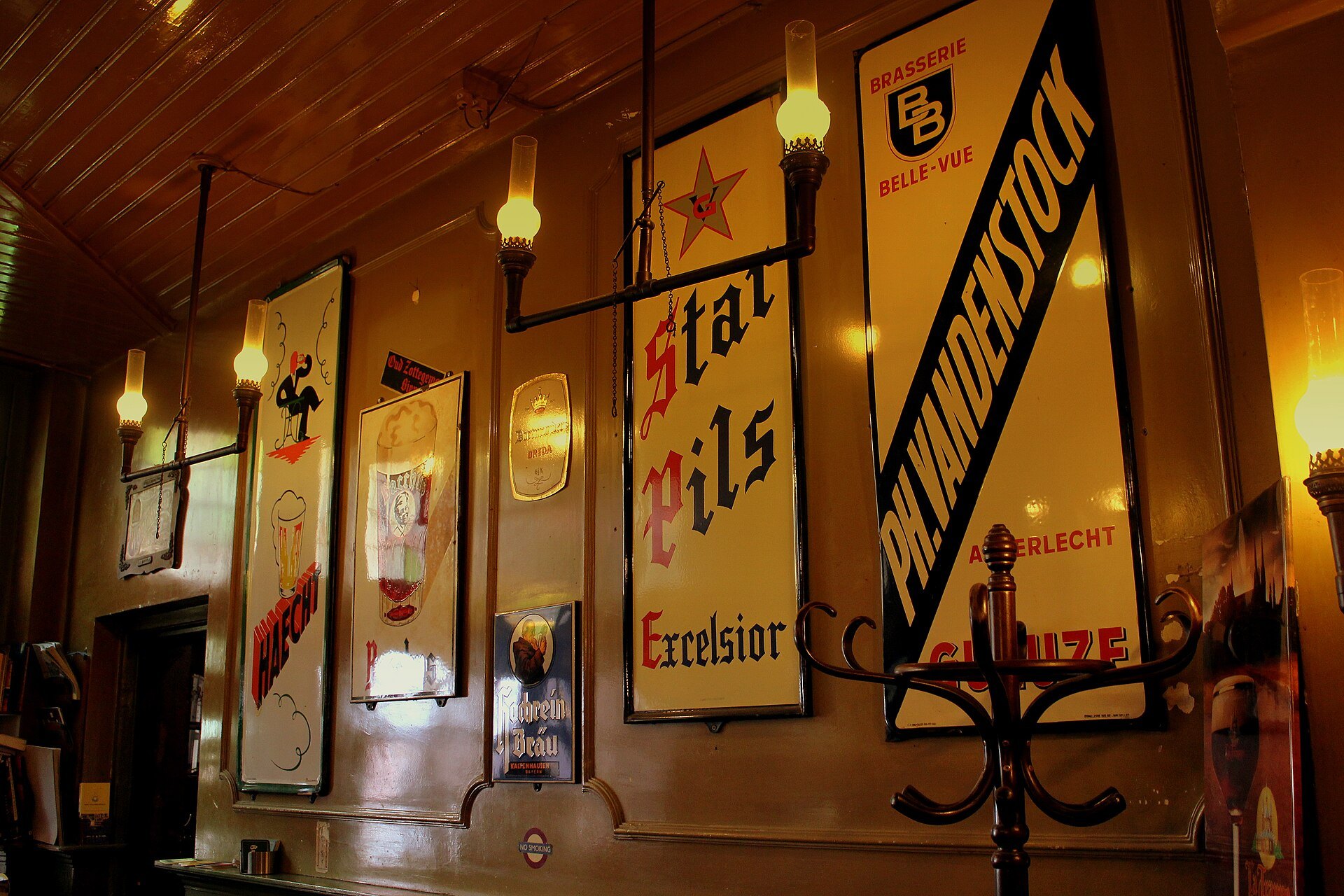
Café Karpershoek on Martelaarsgracht near Amsterdam Centraal

02 · Martelaarsgracht

Café Karpershoek

A genuine old drinking house a short walk from Amsterdam Centraal, at Martelaarsgracht 2. The café’s own tradition, including a lottery-rhyme story, claims 1606. The City of Amsterdam’s 2025 summary of Maarten Hell’s research puts the earliest firm record of a drinking house on the site in 1641, as De Oldenburger Kelder, a stop for German and Frisian skippers, and notes that there is also an indication from 1606. We keep both dates in view: 1641 is the solid documentary anchor; 1606 is possible, and is the year the café itself uses.

Tip: Almost next to Centraal Station, and about two minutes from In de Wildeman. A natural first or last stop on a brown-café walk.

Directions: Google Maps · Apple Maps

Photo: Stichting Jacob Spin, CC BY-SA 4.0, via Wikimedia Commons

Sources: Café Karpershoek (official) · Gemeente Amsterdam, 19 February 2025: De oudste kroeg

See Café Karpershoek on our Unique Pubs deck →

Find a stay near Café Karpershoek →
In de Wildeman beer café on Kolksteeg, Amsterdam

03 · Kolksteeg

In de Wildeman

This is the honest modern stop on a historic brown-café walk. In de Wildeman opened in 1986, founded by Henk Eggens, in a former distillery tasting room on Kolksteeg. It is a specialist beer café — a long draught and bottle list, wood-panelled and conversation-focused, with no music or TV — not a 17th-century brown café. We include it because it sits next to Karpershoek and is one of the centre’s best-known beer rooms.

Tip: On Kolksteeg / Nieuwezijds Kolk, about five minutes’ walk from Centraal and roughly two minutes from Karpershoek. Check indewildeman.nl for current hours.

Directions: Google Maps · Apple Maps

Photo: calflier001, CC BY-SA 2.0, via Wikimedia Commons

Sources: In de Wildeman (official) · Stichting Erfgoed Nederlandse Biercultuur

See In de Wildeman on our Unique Pubs deck →

Find a stay near In de Wildeman →
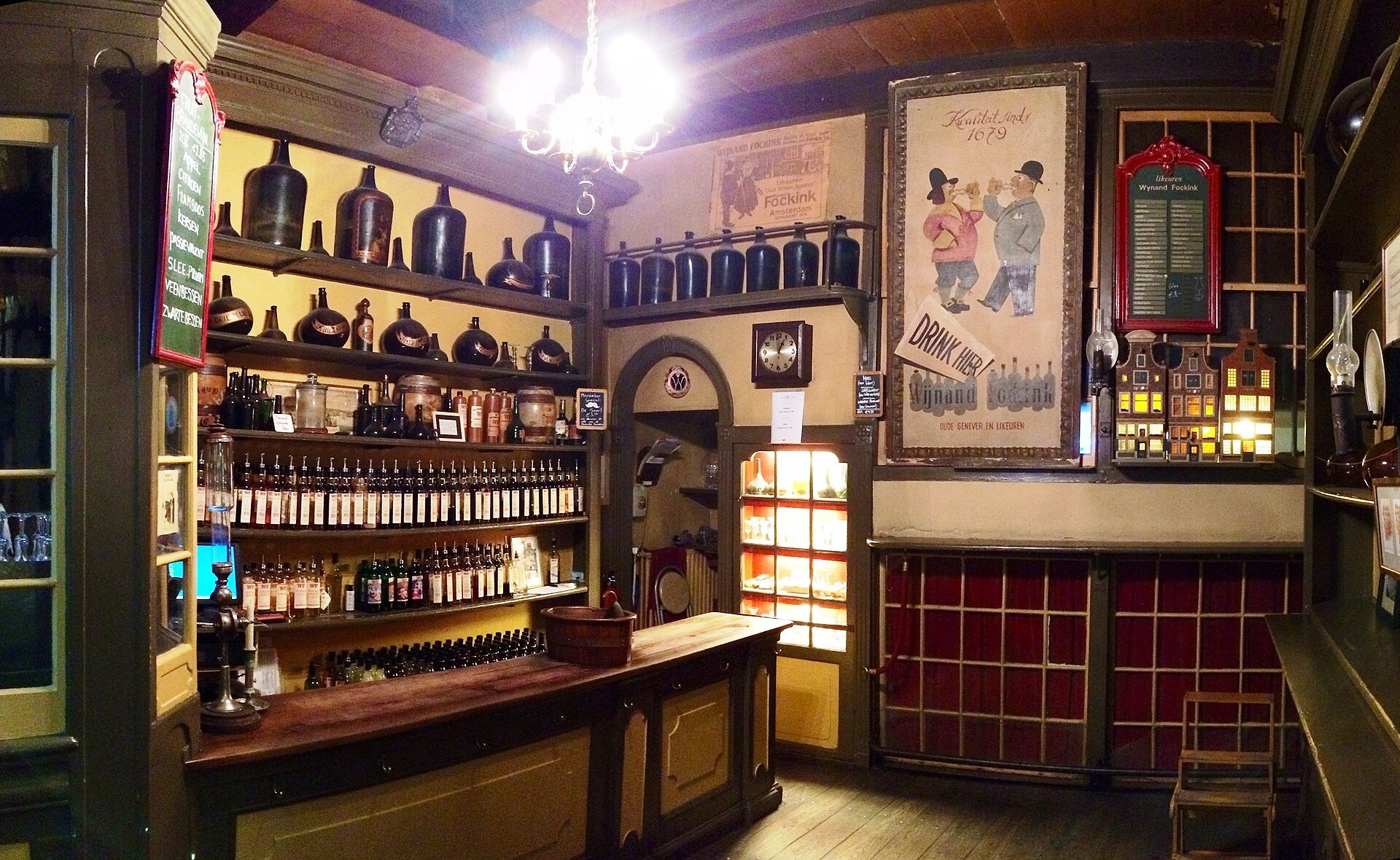
The Wynand Fockink tasting room on Pijlsteeg, Amsterdam

04 · Pijlsteeg

Wynand Fockink

A traditional proeflokaal (tasting room) in the alley behind Dam Square, not a brown café in the strict sense, but one of the city’s classic historic drinking rooms. A 2015 account for the Vereniging Vrienden van de Amsterdamse Binnenstad, by Eveline Brilleman, dates a small distillery on Pijlsteeg to 1679 under Jan Bierman. Wynand Fockink arrived in Amsterdam in 1724 and, in that account, took over Bierman’s still-small distillery five years later, in 1730 — not in 1724. The official about page tells the later family-business story and names Wynand Fockink as founder, without itself giving the 1679 date. Jenever and Dutch liqueurs are poured to the brim of a tulip glass; the tradition, described in the same history, is that you take the first sip bent over the bar without lifting the glass (“buigen voor een borrel”). Behind the tasting room, the distillery offers tours.

Tip: The room is tiny and often standing-room only. Book distillery tours on wynand-fockink.nl; treat the tasting-room queue as walk-up unless the official site says otherwise.

Directions: Google Maps · Apple Maps

Photo: Gryffindor, CC0, via Wikimedia Commons

Sources: Wynand Fockink: About Us · VVAB / Eveline Brilleman, Binnenstad 268 (2015)

See Wynand Fockink on our Unique Pubs deck →

Find a stay near Wynand Fockink →
Café Hoppe on the Spui in Amsterdam

05 · Spui

Café Hoppe

Café Hoppe’s official about page says it has stood on the Spui since 1670, first as a jenever-distillery tasting room. That 1670 date is the café’s own claim; we have not independently verified a founding document for it. Today there are two rooms: the standing bar at no. 18, a listed historic interior with old jenever barrels behind the bar, and the sitting room at no. 20, which the official history says was brought into the business in the early 20th century and joined through the wall in the 1930s under Harry Mustert, who also gave the café its present name.

Tip: On the Spui, a short walk from the Dam or from the tram stop. Friday afternoons are the busy local hour the café itself highlights; earlier in the week is calmer.

Directions: Google Maps · Apple Maps

Photo: Jane023, CC BY-SA 4.0, via Wikimedia Commons

Sources: Café Hoppe: About

See Café Hoppe on our Unique Pubs deck →

Find a stay near Café Hoppe →
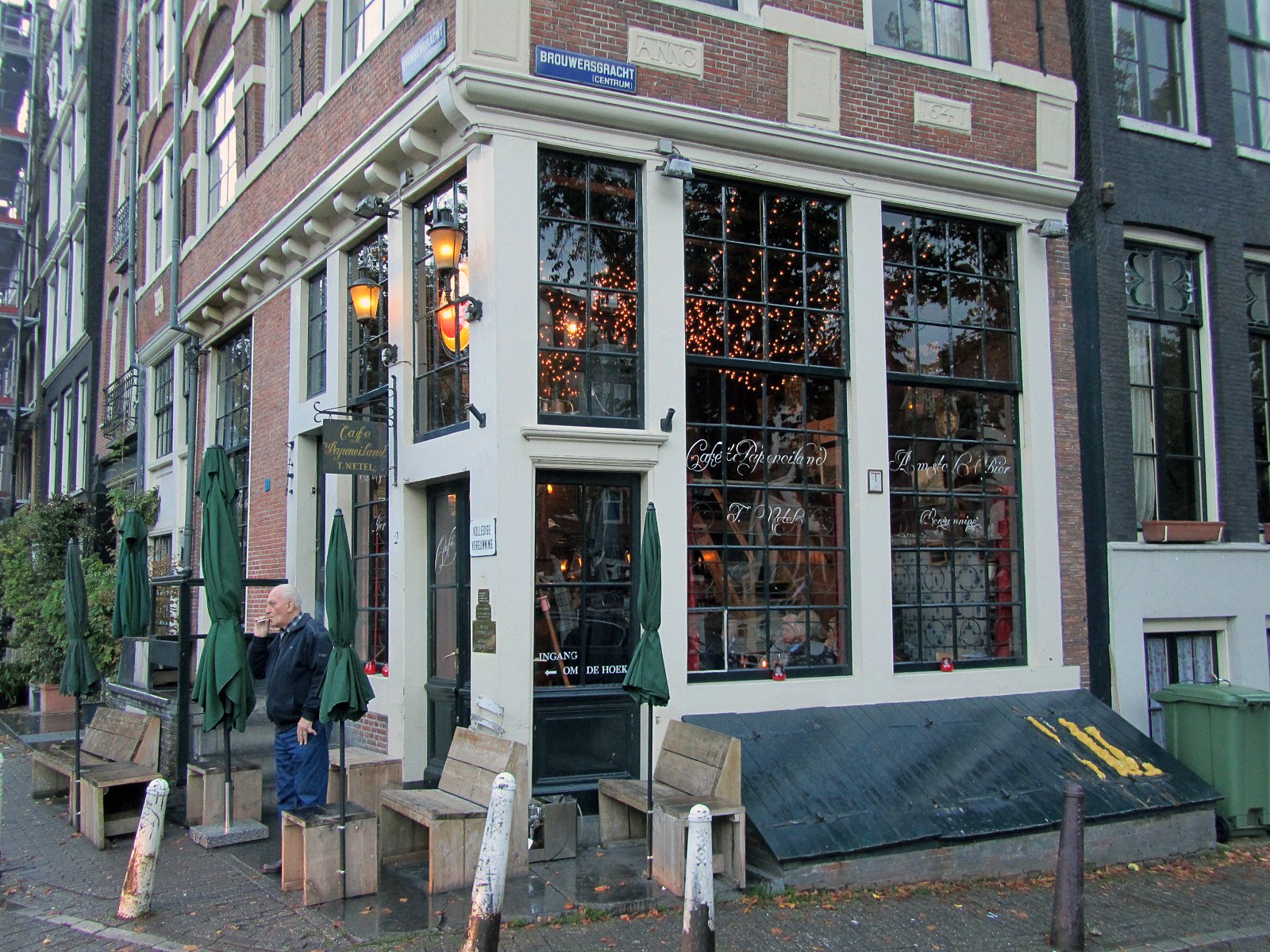
Café Papeneiland at the corner of Prinsengracht and Brouwersgracht, Amsterdam

06 · Prinsengracht

Café Papeneiland

The corner building at Prinsengracht 2 / Brouwersgracht was constructed in 1642 for Egbert Gerritsz Daelder. The café’s official history says it has always served as a store or pub with a small living area, but it was fully licensed as a pub only in 1896, then under the name Café De Blauwe Druif. A 1956 restoration by Hendrick de Keyser brought back the crow-stepped gable and the present name, ’t Papeneiland. A tunnel to a hidden Catholic church is, in the café’s own words, “the story goes.” The official history page also recounts a visit by Bill Clinton and a slice of apple pie; that is the house’s account.

Tip: At the junction of Prinsengracht and Brouwersgracht, a pleasant canal walk from the Spui or from Centraal. Do not treat “café since 1642” as a documented continuous licence — the official history itself dates the full pub licence to 1896.

Directions: Google Maps · Apple Maps

Photo: Paul2, CC BY-SA 3.0, via Wikimedia Commons

Sources: Café Papeneiland: History · Café Papeneiland (official)

See Café Papeneiland on our Unique Pubs deck →

Find a stay near Café Papeneiland →

A walkable route from Centraal

Walking times below are approximate (straight-line distances at a typical city walking pace). Use the map links on each card for turn-by-turn directions. All six sit in a compact band of the old centre.

  1. Café Karpershoek on Martelaarsgracht, almost at Amsterdam Centraal
  2. About 2 minutes to In de Wildeman on Kolksteeg
  3. A few minutes more to In ’t Aepjen at the start of the Zeedijk
  4. On toward the Dam and Wynand Fockink in Pijlsteeg
  5. South to Café Hoppe on the Spui
  6. Along the canals to Café Papeneiland at Prinsengracht and Brouwersgracht

De Drie Fleschjes, which the City of Amsterdam calls the oldest documented drinking house still in use, is also just behind the Dam, on Gravenstraat. It is not on our deck, but it sits naturally on the same walk if you want the documentary “oldest” stop.

What “oldest” gets wrong here

Official café websites sometimes date the room to the building. We follow the City of Amsterdam’s 2025 summary of Maarten Hell’s work, and the cafés’ own history pages, to keep those apart. We have not used a 1519 date for In ’t Aepjen, or a “café since 1642” line for Papeneiland that overruns the official 1896 licence date.

Frequently asked questions

What is a brown café?

A bruin café, or brown café, is a traditional Dutch pub: wood, tobacco-stained or wood-toned walls, a neighbourhood room rather than a cocktail bar. Several of the best-known rooms are old buildings whose café use is later than the façade. This page keeps those dates apart.

What is the oldest café in Amsterdam?

On the City of Amsterdam’s 2025 summary of historian Maarten Hell’s research, the oldest documented drinking house that still functions as one is proeflokaal De Drie Fleschjes on Gravenstraat, with a drinking house on that site recorded in 1618. It is not on our deck. Among the six rooms here, Karpershoek has the strongest early record (a tavern on the site in 1641, with a possible 1606 indication). Hoppe claims 1670. In ’t Aepjen’s building is 16th century, but the café dates from 1991.

Has In ’t Aepjen been a café since the 1500s?

No. The wooden house is mid-16th century. The City of Amsterdam, citing Maarten Hell (19 February 2025), says there was never an inn in that building and that the café was established in 1991. The monkey legend is folklore.

Is In de Wildeman a historic brown café?

It occupies a historic former distillery tasting room, but the café itself was founded in 1986. We include it as a nearby specialist beer café, not as a 17th-century brown café.

Do I need to book at Wynand Fockink?

The tasting room is small and often standing-room only. The official site is the place to book distillery tours. We did not treat a walk-in rule for the tasting room as locked; check wynand-fockink.nl before you go.

Swipe all unique pubs → · Iconic cities · Brussels beer cafés · Prague beer halls · Bamberg Rauchbier · Submit a place · Historic pubs in Edinburgh

Facts were checked against the sources linked under each entry on 23 November 2026. Where sources disagree, the claims table states both sides rather than picking a winner. Opening hours change — check the official site before you go.